The traditional workday is undergoing what many are calling the “Great Fragmentation.” While we’ve spent years debating the 4-day work week or the merits of a hybrid job, the reality of 2026 is much more granular. It’s no longer about where you sit; it’s about how you reclaim your time through Microshifting. This trend replaces the rigid 9-to-5 block with fluid, high-intensity bursts that prioritize mental clarity over mere clock-watching.
Microshifting is a non-linear work model where employees complete their professional responsibilities in short, high-intensity bursts—often referred to as a “one-hour work pattern”, rather than a traditional 8-hour block. By breaking the workday into non-continuous work blocks, individuals can align their tasks with peak energy levels and personal commitments, leading to higher remote work productivity and better work-life balance.
The Shift Toward Radical Flexibility
Recent remote work survey data from Owl Labs’ 2025 State of Hybrid Work Report suggests that the rigid 9 to 5 job is losing its grip, with 67% of workers now interested in “structured flexibility” or non-linear blocks. According to a viral report from The Guardian, this “one-hour work pattern” is becoming the secret to a balanced life for the modern professional.
At our company, we’ve observed this evolution firsthand across millions of check-ins from remote-first companies. This guide combines real-time hybrid work statistics with these emerging trends to help you understand why the best way to work from home in 2026 is increasingly non-linear.
Why 9-to-5 is No Longer the Standard
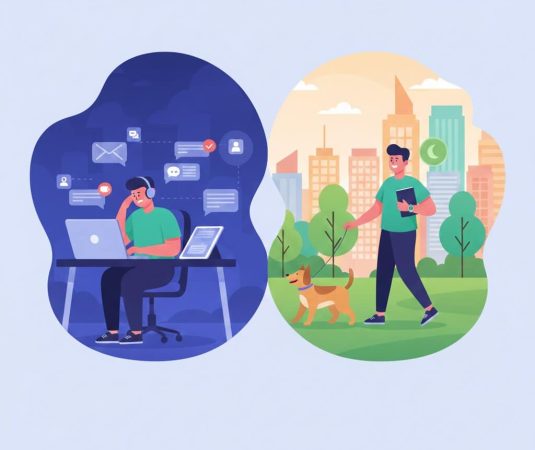
The move toward microshifting represents a fundamental change in how we view a “productive” day. For decades, the professional world was obsessed with visibility-showing up at 9:00 AM and remaining active until 5:00 PM. However, newer remote working trends show that this rigid structure often leads to “keyboard jamming,” where employees feel forced to look busy during their natural energy lulls just to satisfy a clock.
The best remote companies are beginning to realize that remote work productivity isn’t a flat line; it’s a series of peaks and valleys. By embracing flexible hours and work from home, organizations allow their talent to work during their “chronotype peaks”-those specific times of day when their focus is naturally highest. This isn’t just about working online; it’s about integrating careers from home into a lifestyle that values work-life balance above all else.
The Rise of the One-Hour Work Pattern
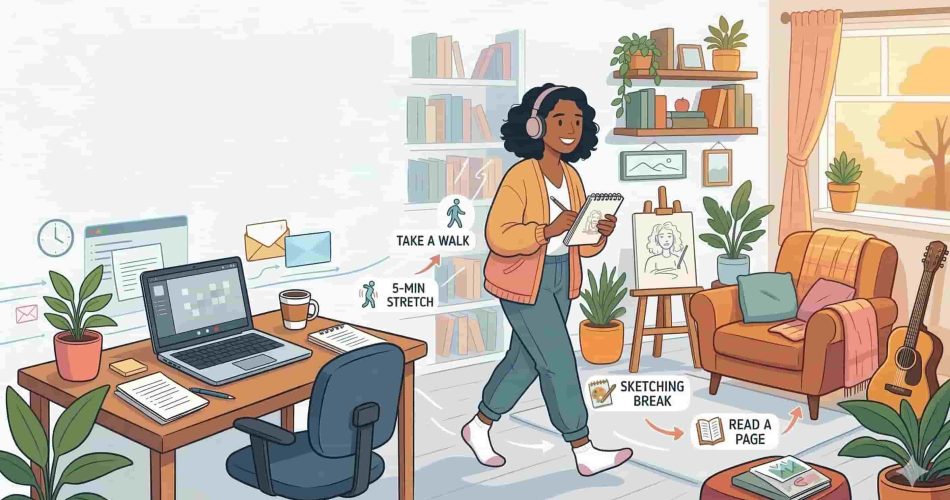
In the jobs of the future, the workday is no longer a monolith. We are seeing a surge in non-continuous work blocks, where a professional might engage in a high-intensity “sprint” for an hour, followed by a total disconnection to handle domestic requirements or personal wellness. This approach ensures that every minute spent at the desk is high-intent rather than high-volume.
For those looking at ways to work from home more effectively, this fragmentation is a benefit. It allows for a happy job experience because it removes the guilt of the “midday slump.” Whether you are managing side jobs from home or simply looking for good at home jobs that don’t lead to burnout, the ability to shift your focus in smaller increments is becoming a major competitive advantage in the 2026 talent market.
Managing the New Workflow
Managing this level of autonomy can be a challenge for even the best remote companies to work for. When a team is working in fragments, the biggest hurdle is visibility without falling into the trap of micromanagement. This is where simple, low-friction tools come into play.
A remote employee utilizing AttendanceBot, for instance, can simply signal when they are “in” for a micro-burst and “out” for a break through a quick message in Slack or Teams. It’s a lightweight way to maintain remote work productivity transparency without requiring a constant, intrusive connection. This allows the team to see who is active at any given moment, supporting an asynchronous culture that respects the individual’s schedule while keeping the collective rhythm intact.
The Science of “Peak-Performance Bursts”
The move toward microshifting is grounded in a deep understanding of cognitive load and “brain reset” mechanics. Research from Microsoft’s Human Factors Lab has demonstrated that back-to-back work sessions without meaningful disconnection lead to a cumulative buildup of stress in the brain. In a traditional 9 to 5 job, this stress manifests as “cognitive fatigue,” where the ability to solve complex problems drops significantly after just two hours of continuous activity.
By utilizing non-continuous work blocks, employees allow their brain’s neural pathways to “offload” the stress of one task before starting the next. This prevents the “task residue” that usually kills remote work productivity. For remote-first companies, this science-backed approach ensures that when an employee “microshifts” back into work, they are doing so with a refreshed prefrontal cortex, leading to higher accuracy and more creative output.
Combatting the “Always-On” Mental Drain
In the landscape of working from home trends, the most successful professionals are those who treat their attention as a finite resource. A study by the University of California, Irvine found that it takes an average of 23 minutes to return to a deep state of focus after an interruption. Microshifting solves this by creating “protected sprints”-short, intense bursts where the goal is deep work, followed by a scheduled break.
The best companies recognize that a two-hour afternoon gap for personal wellness or domestic requirements isn’t “time lost.” It is, in fact, the necessary “cool down” period that allows for a high-performance evening burst. By integrating careers from home with this rhythmic cycle, the best places to work are effectively eliminating the burnout associated with modern digital noise. This is how the jobs of the future are being won: not by working more hours, but by protecting the quality of the hours worked.
Implementing this level of cognitive science doesn’t have to be complicated. For the remote employee, the biggest hurdle is letting the team know when they are in a “Peak-Performance Burst” and when they are “Cooling Down.”
A lightweight tool like AttendanceBot acts as the team’s shared nervous system. With a simple status update in Slack or Teams, you can signal your “Micro-burst” status. It provides the visibility managers need to trust the process, without requiring the employee to stay tethered to their desk during their necessary recovery periods. It’s the technical bridge that makes flexible hours work from home actually sustainable for high-growth teams.
The Impact of Flexibility on Output
As the global workforce leans further into the microshifting model, the data surrounding its success is becoming harder to ignore. According to remote work productivity statistics featured in Forbes, companies that allow employees to dictate their own schedules see a marked decrease in “absenteeism” and a significant boost in “discretionary effort”-that extra mile employees go when they feel trusted.
Many companies are pivoting toward a culture of results over hours. When workers engage in flexible remote work, they often find they can accomplish in four focused hours what used to take eight hours in a traditional office setting. This is largely because the “one-hour work pattern” eliminates the cognitive drain of the “mid-afternoon slump” that plagues the 9 to 5 job.
The Connection to the 4-Day Work Week
The rise of microshifting is closely linked to the global pilot programs for the 4 day work week. These trials have shown that when time is treated as a finite, precious resource, workers become more protective of their focus.
For remote-first companies, the goal isn’t just to work fewer days, but to work more intelligently. By utilizing non-continuous work blocks, teams can maintain high output while enjoying the benefits of working from home, such as reduced commute stress and more time for domestic requirements. This synergy is what makes flexible working jobs so attractive to top-tier talent in 2026.
Bridging the Hybrid Gap
While the personal benefits are undeniable, shifting toward a non-linear schedule introduces a unique hurdle: the “coordination tax.” If one teammate is active at 6:00 AM while another is microshifting at 9:00 PM, how does a team maintain remote work productivity without drowning in a sea of “Are you there?” pings?
The answer isn’t more meetings-it’s asynchronous transparency. Leading remote-first companies are moving away from high-pressure monitoring and toward lightweight, “passive” visibility. Instead of a manager needing to check in, the culture shifts toward a shared digital pulse.
The Power of the Digital Pulse
This is where a hybrid work strategy becomes seamless. By utilizing a “Live Punch Board,” a remote employee can simply toggle their status to signal they are in a high-intensity “focus burst” or away for a “life break.”
This shift in perspective accomplishes three things:
- Ends Ping Fatigue: Teammates know when to collaborate and when to wait.
- Guards Deep Focus: It protects your “off” periods, making true disconnection possible.
- Replaces Intrusive Checks: Constant “Are you there?” pings are replaced by a transparent, real-time status.
When visibility becomes a self-managed habit, autonomy and team alignment finally work together. The result is a high-trust environment where the impact of your work matters far more than the specific hours you log.
How Leaders Can Adapt to Microshifting?
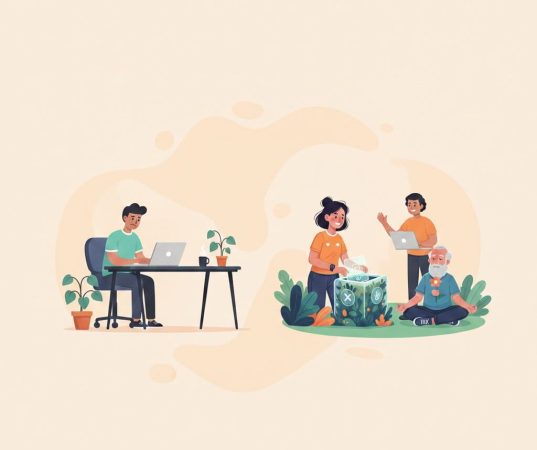
If microshifting is the defining characteristic of the 2026 workforce, leadership must evolve from managing “hours logged” to managing “value created.” This transition requires a fundamental rethink of the corporate structure. According to research, the most resilient companies are those that replace rigid hierarchies with “dynamic ecosystems” of talent.
Here is how modern leaders can bridge the gap:
1. Establish Asynchronous Norms
In a non-linear environment, “instant response” culture is the enemy of remote work productivity. Leaders must set clear expectations for availability that respect the “out” periods of a microshifting schedule. Instead of demanding immediate replies, top remote-first companies utilize status-syncing tools to let the team know when a colleague is in a deep-work “burst” versus a “life break.” The goal is to make collaboration predictable without requiring constant presence.
2. Democratize Flexibility Across Roles
One of the biggest hurdles for a hybrid job model is ensuring fairness. While microshifting is a natural fit for knowledge workers, leaders must think creatively for frontline or time-bound roles. This might involve “shift-swapping” marketplaces or flexible working jobs that utilize compressed schedules. The objective is to ensure that the benefits of working from home-autonomy and balance-are translated into different forms of flexibility for every function, preventing a “two-tier” corporate culture.
3. Lean into “Supportive” Tech, Not Surveillance
The 2026 Work Trend Index highlights a growing tension: employees want AI and automation to handle the “drudge work,” but they fear digital surveillance. True leadership involves investing in tools that facilitate flexible remote work rather than monitoring it. Smart scheduling bots and automated status updates allow for a “digital pulse” of the company.
For instance, AttendanceBot serves as a lightweight facilitator here-it’s not about watching the employee, but about giving the remote employee a way to own their schedule transparently. By using technology to reduce administrative friction, leaders empower their teams to focus on high-impact work during their self-chosen windows of peak performance.
Why Organizations Must Adapt Now
The window for “wait and see” has closed. As working from home trends stabilize, the companies that refuse to accommodate microshifting will find themselves losing their best talent to the best places to work that prioritize human energy over office attendance.
Choosing to ignore this shift doesn’t stop it from happening; it simply makes it invisible. By formalizing these non-continuous work blocks and supporting them with the right culture and tools, organizations can move from a state of constant burnout to a state of high-velocity output. The future belongs to a leader who understands that a happy job is one that respects the complexity of a human life.
FAQ: Common Questions About Microshifting
Does Microshifting Lead to Burnout?
Actually, it’s designed to prevent it. By allowing for non-continuous work blocks, employees can step away when they feel mentally exhausted rather than “powering through” unproductively. This promotes a healthier work-life balance.
Can Any Industry Adopt a One-Hour Work Pattern?
While it is easiest for remote work or creative roles, many of the best places to work in project management and administration are successfully adopting the trend by focusing on outcome-based productivity rather than time-stamping.
How Do You Track Hours for Someone Working in Fragments?
The best way to work from home with this model is to use a frictionless bot. AttendanceBot allows users to clock in and out via Slack or Teams with a single word, making it easy to log flexible remote work without the headache of a manual spreadsheet.
Is This Trend Just for Gen Z?
Not at all. While remote work survey data shows Gen Z leads the demand, Millennials and Gen X are using these ways to work from home to balance childcare, elderly care, and side jobs from home.
How Does AttendanceBot Help Managers Track Microshifting Without Micromanaging?
AttendanceBot is built on the principle of transparency over surveillance. Instead of tracking mouse movements or screenshots, it provides a frictionless “digital handshake.” When an employee enters a non-continuous work block, they simply type “in” in Slack or MS Teams. When they step away for a personal break or domestic requirements, they type “out.”
This creates a real-time, bird’s-eye view of who is currently active and who is “away.” It allows leaders to maintain remote work productivity and coordinate meetings without ever having to send a “busy?” ping. It’s the simplest way to support flexible hours work from home while keeping the team’s rhythm visible and professional.