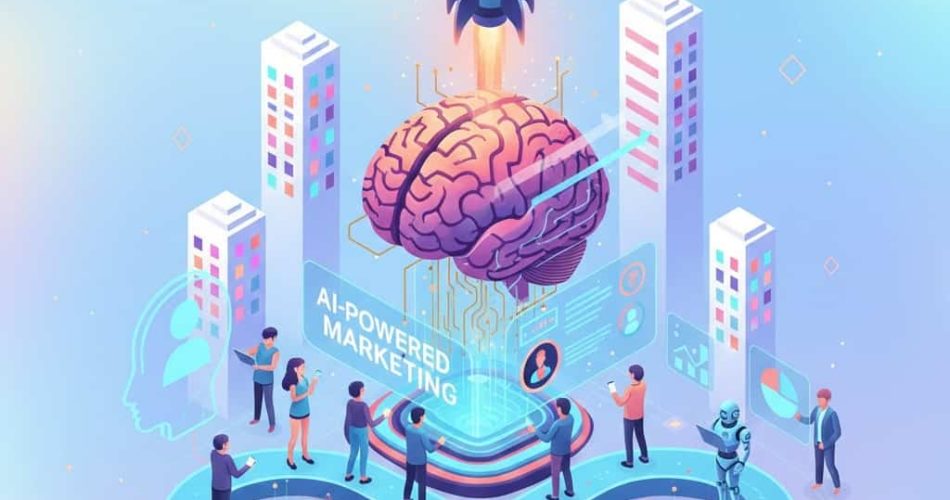
For years, marketing success followed a familiar formula: publish content, rank on search, earn clicks, and convert visitors. That formula is quietly breaking. Today, an increasing number of people never reach a website at all-they ask AI for answers, get what they need instantly, and move on. This shift has made traditional traffic growth harder, but it hasn’t made marketing obsolete. In fact, it has created an opportunity for AI-powered marketing to deliver smarter, more personalized strategies that meet customers where they are.
What it has done is raise the bar.
Instead of competing for clicks alone, marketers are now competing for relevance, trust, and memorability. This is where AI in marketing becomes less of a disruption and more of a strategic advantage. While AI reshapes how information is discovered, it also gives teams access to capabilities that were once reserved for large enterprises-advanced analysis, rapid experimentation, and real-time optimization.
Many teams feel the pressure. Campaigns take more effort, timelines are tighter, and returns don’t always scale the way they used to. But this challenge isn’t about effort-it’s about approach. Relying solely on past playbooks no longer works in an environment shaped by marketing automation and evolving digital marketing trends.
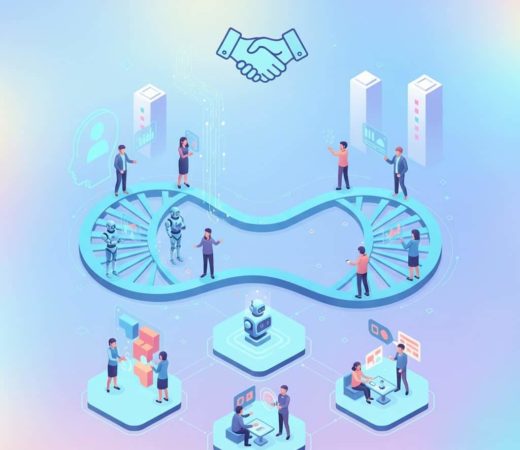
The opportunity lies in human-AI collaboration. AI excels at speed, pattern recognition, and execution. Humans bring context, empathy, and creative direction. When combined, they form a system that can move faster without losing authenticity. This balance is becoming the foundation of the future of marketing.
Modern marketing technology now enables small teams to operate with the sophistication of much larger organizations. Instead of outsourcing insight and execution, businesses can build internal workflows powered by AI-powered tools, guided by human judgment at every step. AI-powered marketing allows these teams to leverage technology strategically while maintaining creativity and control.
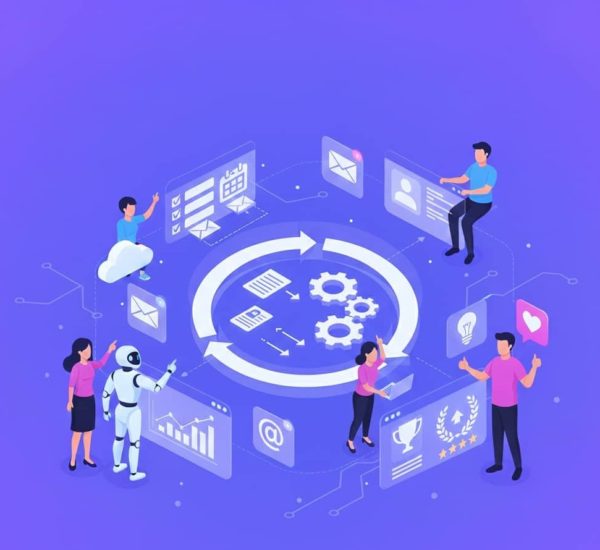
New growth models are emerging from this shift-ones that focus on continuous learning, adaptation, and amplification rather than one-time wins. These models recognize that marketing is no longer linear. It’s a loop of expression, refinement, distribution, and evolution-driven by data, creativity, and constant feedback.
In this environment, the brands that grow won’t be the ones resisting AI. They’ll be the ones using it deliberately, thoughtfully, and in partnership with people.
Why AI Can’t Fix a Brand That Hasn’t Found Its Voice
AI is fast. It’s efficient. It’s scalable.
What it isn’t is opinionated.
That’s the part many teams miss when they rush to use AI in marketing. They try to automate expression before deciding what they actually stand for. When that happens, AI doesn’t clarify a brand-it flattens it.
A surprising number of marketing leaders still haven’t written down what makes their business meaningfully different. In the context of loop marketing, this lack of a documented unique value proposition quietly undermines everything that follows. Messaging becomes generic. Campaigns feel interchangeable. Results stall.
When teams don’t agree on their story, performance issues show up fast. Goals slip. Morale drops. Not because people aren’t working hard, but because effort is being applied without direction.
This is where human-AI collaboration needs to be redefined. AI-powered marketing shouldn’t be asked to invent a brand; it should be asked to challenge one. Humans decide the voice, the beliefs, and the boundaries. AI reflects those decisions back at scale, stress-testing them from every angle.
Modern marketing technology makes this possible without massive budgets. Marketers can now explore positioning, simulate audience reactions, and pressure-test messaging using AI-powered tools that respond in real time. What once required focus groups and agencies can now happen inside a single workflow.
The shift isn’t about using better tools. It’s about using them in the right order. Expression comes first. Scale comes second.
That’s the essence of the Express phase-not as a framework step, but as a rule:
If a brand hasn’t found its voice, AI will only make the silence louder.
Make Every Customer Experience Personal
Personalization used to be about simple tricks, like inserting a first name in an email. Today, those small gestures barely scratch the surface. Marketing has long relied on broad assumptions: you group people, make educated guesses about what they want, and hope it resonates. But the stakes-and expectations-have changed.
With AI-powered marketing, personalization can reach an entirely new level. Instead of making guesses for tens of thousands of people, AI allows you to anticipate what’s relevant for each individual. When the system knows your business, understands your audience, tracks buying signals, and interprets intent, it can create experiences that feel hyper-specific, even for small teams with limited budgets.
Imagine a neighborhood coffee shop sending emails with puns tailored to each customer’s tastes, or a boutique online store recommending products based on recent browsing patterns. These aren’t hypothetical scenarios-they’re achievable because AI-powered marketing tools can process data points humans simply can’t handle manually. The result is content that feels handcrafted rather than automated.
There’s a common fear that AI personalization will make messaging sound generic. In reality, the opposite is true. The quality of personalization depends entirely on the context and data you provide. When used thoughtfully, human-AI collaboration in AI-powered marketing allows businesses to scale meaningful interactions that were once reserved for premium services.
Moving from “one-size-fits-all” communication to interactions that feel custom-made. Think of it as shifting from an off-the-rack suit to one stitched precisely for the wearer. What was once a luxury is now accessible to any business willing to integrate AI thoughtfully into its workflow.
Be Where Your Customers Are Already Looking
People aren’t discovering brands the way they used to. Traditional search clicks are declining as more answers come directly from AI-powered tools and digital assistants. That doesn’t mean opportunity has disappeared-it just looks different. The audience that does reach your business now is more informed, intentional, and ready to engage.
The key is understanding context. Consumers can research endlessly before making a decision. A buyer exploring options for a new sofa, for example, might compare dozens of products before ever visiting a retailer’s site. The brands that are visible where these decisions are happening, through AI-driven recommendations, personalized content, or trusted social channels, gain the highest-quality attention.
Human insight is what makes this approach effective. While AI handles analysis, pattern recognition, and predictive targeting, humans provide judgment, empathy, and creativity. Combining the two through AI-powered marketing lets businesses connect meaningfully without being lost in the noise.
Real-world results confirm this. Companies using AI-powered marketing to fine-tune messaging and reach the right people see better engagement, stronger leads, and more efficient marketing spend. AI-powered marketing tools give marketers the ability to optimize campaigns at scale, while humans ensure the brand voice and experience remain authentic.
The lesson is clear: reaching customers today isn’t about shouting louder or chasing every click. It’s about being present where attention naturally exists and letting AI amplify human strategy, not replace it.
Turning Every Insight Into Smarter Marketing
The real power of combining humans with AI isn’t just efficiency-it’s learning at speed. Every campaign, every interaction, every experiment feeds back into your strategy, helping you make the next move smarter and more precise. Marketing becomes less about luck and more about compounding insight.
In the past, understanding campaign performance was slow and cumbersome. Teams spent weeks reviewing metrics, holding long meetings, and debating what worked and what didn’t. By the time adjustments were made, the moment had often passed.
With AI-powered marketing tools, feedback is immediate. You can ask natural-language questions-“Which messages landed best? Which audience segments are most engaged?”-and get actionable insights in real time. That speed allows teams to pivot quickly, refine messaging, and optimize targeting while campaigns are still running.
AI processes the data, identifies patterns, and suggests optimizations at scale, while humans interpret results, apply strategic judgment, and maintain brand authenticity. Together, this creates a cycle of continuous improvement that’s faster, smarter, and more cost-effective than any traditional process.
In today’s landscape, evolving means more than reacting-it means using insights to anticipate audience needs, tailor experiences, and invest resources where they have the greatest impact. Each campaign isn’t just an isolated effort; it’s a stepping stone toward more effective, informed, and innovative AI-powered marketing.
How AI and Humans Can Work Together to Win
In today’s marketing landscape, success isn’t defined by humans versus machines – it’s defined by how well humans and AI work with each other. Modern marketing teams aren’t just adopting technology; they’re learning to coordinate it with human intuition and strategic thinking to unlock performance that neither could deliver alone.
Studies show this hybrid approach improves productivity and creativity. In experimental business settings, collaboration between humans and AI agents increased team efficiency and allowed people to focus more on high‑value creative tasks while AI handled repetitive or analytical work. This kind of human‑AI collaboration can lead to higher‑quality output and better campaign results overall.
At the same time, adoption and integration of AI tools continue to climb across marketing teams worldwide. Most marketers now use AI daily or weekly to assist with everything from content ideation to analytics and audience segmentation. The trend reflects a broader reality: AI is no longer a niche add‑on – it’s core marketing technology that shapes strategy and execution. (MarTech)
Why Collaboration Beats Automation Alone
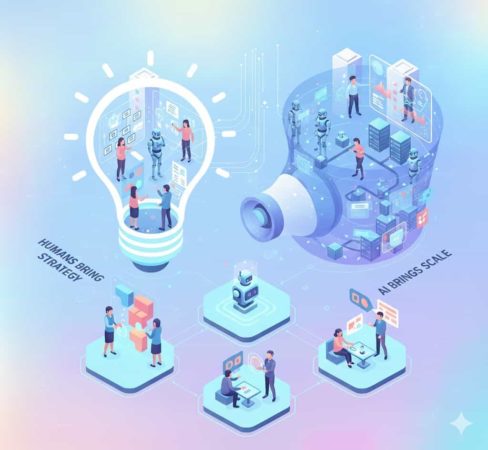
Humans Bring Strategy – AI Brings Scale
AI can process data and generate suggestions at a scale that’s impossible for human teams alone. It can analyze patterns, optimize bids, and serve personalized recommendations with astonishing speed. But raw data and suggestions don’t equal strategy. People interpret those insights, tie them back to brand values, and make judgment calls about tone, context, and customer relationships – areas where AI still can’t operate independently.
This synergy matters because good marketing isn’t just efficient – it’s meaningful. Combining human creativity with algorithmic precision allows teams to produce campaigns that are both effective and authentic.
Real-Time Feedback and Continuous Improvement
One of the biggest advantages of AI in marketing is speed. AI‑powered analytics can surface trends and performance metrics in real time, helping human teams adjust campaigns instantly rather than waiting for weekly or monthly reviews. This leads to faster iterations, better performance optimization, and smarter budget allocation – all fuel for long‑term learning and growth.
Real Business Impact: Data‑Driven Wins
Tangible results back up this approach. Companies leveraging advanced AI-powered marketing capabilities report notable improvements in campaign performance and efficiency compared to traditional methods. In many cases, AI‑enabled strategies deliver higher click‑through rates, reduced costs, and faster campaign launches—outcomes that directly affect ROI and competitive positioning. (All About AI)
These advantages don’t remove the need for human marketers; they enhance it. With AI-powered marketing tools managing data-heavy tasks and real-time optimization, human teams can focus more on strategy, narrative, and building deep connections with customers—the uniquely human elements that drive brand loyalty and long-term value.
Looking Ahead: Building Better Human‑AI Partnerships
The roadmap for winning teams is clear: embrace AI not as a replacement for human talent, but as a force multiplier. As adoption grows and AI‑powered tools become more embedded in everyday workflows, the best outcomes will come from intentional collaboration – where technology extends human capabilities rather than attempts to emulate them.
In this new era of marketing, the battle isn’t humans versus AI. It’s humans mastering the art of working alongside AI to create something greater than either could on its own.