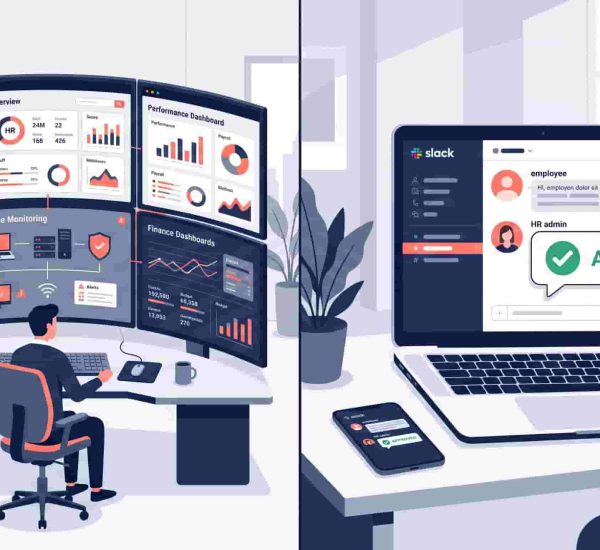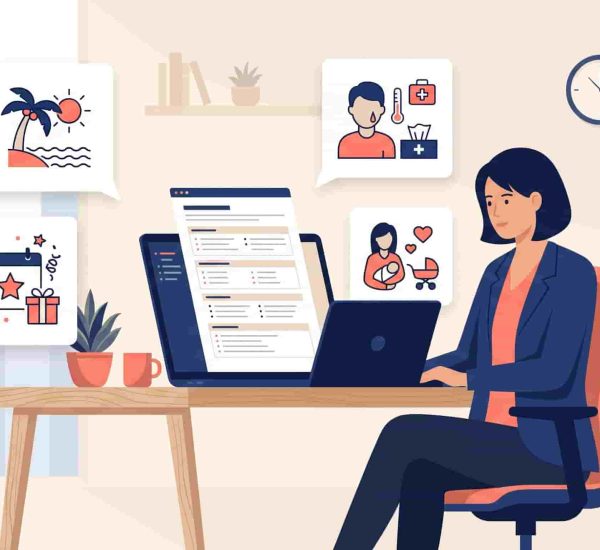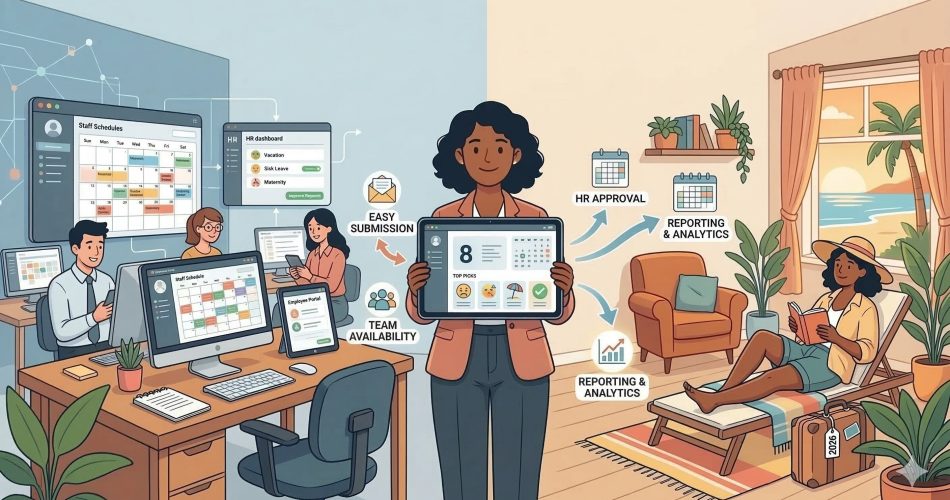
Every HR manager has lived this moment. It’s a Monday morning, three people have emailed in sick, two more have a half-day approved somewhere in a spreadsheet, and someone on Slack is asking whether their PTO balance includes last Friday. You’re supposed to be focused on people strategy. Instead, you’re doing data entry.
For small and mid-sized businesses, leave management software isn’t a luxury – it’s the difference between an HR team that operates strategically and one that spends its week chasing approvals and fixing calendar conflicts. Industry research consistently shows that HR automation can cut administrative workload in half – and for small business HR teams already stretched thin, that’s not a nice-to-have. It’s survival.
The good news? The best leave management software in 2026 has gotten remarkably good and remarkably affordable. Whether you’re managing a 20-person remote team or a 200-person hybrid setup, there’s a tool built for exactly where you are. This guide breaks down the top options, what makes each one worth considering, and how to pick the right leave management system for your team without overcomplicating it.
The best leave management software for small businesses in 2026 includes AttendanceBot, BambooHR, Calamari, Factorial, and Zoho People. These tools automate time-off requests, approvals, and tracking inside platforms your team already uses. The right leave management system eliminates manual processes, reduces HR admin time, and gives managers real-time visibility over staff availability.
Why Manual Leave Management Fails Small Businesses
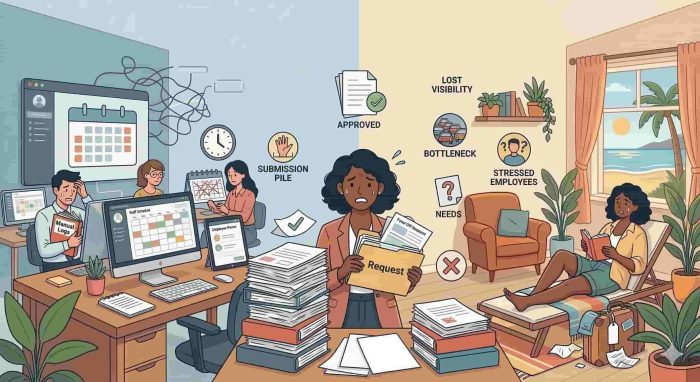
Small businesses often start the same way: a shared Google Sheet, a Slack message to the manager, and maybe a quick email to HR. It works well with eight people. Then you hit 25, then 50, and suddenly that Google Sheet is a liability.
Manual leave tracking software – or the lack of it – creates problems that compound quietly until they become expensive. Here’s what that actually looks like in practice:
Approval Chains Break Down
When leave requests live in inboxes and chat threads, things get missed. A manager approves a vacation request verbally on a Friday and forgets to update the spreadsheet. Two weeks later, the payroll is wrong, and the employee is frustrated.
Balances Are Always in Question
Without an automated employee leave management system, HR spends hours every month reconciling PTO balances manually. Employees second-guess their own balances, which means more back-and-forth and less trust in the process.
Compliance Becomes a Guessing Game
For US-based teams, in particular, manually tracking leave-of-absence software requirements such as FMLA, state-specific sick leave laws, and accrual rules is a compliance risk waiting to happen. One missed entitlement can turn into a legal headache.
Visibility Disappears at Scale
When three people are out on the same day and no one has a clear view of team availability, projects slip. Managers make scheduling decisions without the full picture, and productivity suffers.
The Real Cost Isn’t Just Time
According to the CDC Foundation, productivity losses linked to absenteeism cost US employers $225.8 billion annually – roughly $1,685 per employee. For small businesses operating on thin margins, unmanaged leave isn’t just an HR inconvenience. It directly affects the bottom line.
The fix isn’t hiring another HR person. It’s replacing the spreadsheet with a proper time off tracking software that handles requests, approvals, balances, and reporting automatically, so your HR team can get back to the work that actually moves the needle.
What to Look for in Leave Management Software
Not all leave management systems are built the same. Some are bloated enterprise platforms that take three months to implement. Others are so bare-bones they barely improve on the spreadsheet you’re replacing. Here’s what actually matters for small and mid-sized teams:
Ease of Use for Everyone – Not Just HR
The best employee leave management system is one that your entire team will actually use. If employees need a training session to submit a time-off request, adoption will be low, and HR ends up managing the tool instead of benefiting from it. Look for something with a simple, intuitive interface that works where your team already spends their day – ideally inside Slack or Microsoft Teams.
Automated Approvals and Notifications
Manual approval chains are where leave requests get stuck. A good time off management system should automatically route requests to the right manager, send reminders, and update balances in real time – without anyone having to chase anything down.
Custom Leave Types and Policies
Every company handles leave differently. Your annual leave management system should support custom leave types – sick leave, PTO, parental leave, sabbaticals, comp time – and allow you to set different accrual rules, carry-over policies, and eligibility criteria by team, tenure, or location.
Real-Time Visibility and Reporting
HR managers and team leads need a clear, live view of who’s in, who’s out, and what’s coming up. Strong absence management software gives you that at a glance – plus downloadable reports for payroll, audits, and compliance reviews.
Integration With Your Existing Stack
Your leave tracking software shouldn’t live in a silo. The best tools integrate with payroll systems, HR platforms, and calendar tools like Google Calendar and Outlook, so everything stays in sync automatically. If you’re already running your team on Slack, a native Slack integration isn’t just convenient – it’s a game changer for adoption. We’ve written about exactly how that works in our breakdown of how Slack leave management saves 40+ admin hours a month.
Pricing That Makes Sense for Small Teams
Enterprise HR platforms charge enterprise prices. For hr software for small business, you need transparent, per-user pricing that scales with your headcount – not a $10,000 annual contract designed for a 500-person company.
8 Best Leave Management Software for Small Businesses in 2026
1. AttendanceBot
For small and mid-sized teams already working inside Slack or Microsoft Teams, AttendanceBot is the most frictionless leave management software available today. Instead of logging into a separate platform to request time off, employees simply message AttendanceBot directly inside Slack or Teams — the whole workflow, request, approval, balance update, and calendar sync, happens automatically without anyone leaving their workspace.
What sets AttendanceBot apart as an employee leave management system is how much it automates without requiring HR to babysit the process:
Leave types and policies — configure unlimited custom leave types — vacation, sick leave, TOIL, parental leave, floating holidays, unpaid leave — each with its own rules. Set accrual rates per pay period or monthly, define carryover caps, allow or restrict negative balances, and apply different policies per department, location, or tenure band. Once configured, the bot enforces policies automatically on every request.
Approval workflows — set up single or multi-level approval chains per leave type or team. Managers receive the request as a Slack or Teams message and approve or decline with one click. No login, no portal, no email thread. If a manager is on leave themselves, backup approvers kick in automatically.
Real-time PTO balance tracking — employees check their remaining balance by sending a message in chat. Balances update the moment leave is approved — no waiting for HR to manually adjust a spreadsheet. Managers see a live team balance view from the dashboard.
Team availability and calendar sync — approved leave syncs automatically to Google Calendar and Outlook, so anyone scheduling a meeting sees who’s out without checking a separate system. The team availability view inside Slack or Teams shows at a glance who’s working, who’s remote, and who’s on leave — useful for hybrid teams coordinating across locations.
Payroll-ready reporting — leave reports export as structured Excel files filterable by employee, leave type, department, date range, or location. The Gusto integration syncs approved leave directly into Gusto payroll without manual re-entry. ADP, BambooHR, and Wagepoint exports are also supported.
Beyond leave management — for teams managing hybrid or remote setups, AttendanceBot handles daily check-ins, shift scheduling, time tracking, and workforce visibility in the same tool — making it a practical all-in-one solution for lean HR teams that need more than just a leave tracker. It is also SOC 2 Type 2 certified, which matters for teams with data security or compliance requirements.
You can read more about how teams are using it in our guide on the best absence trackers for small businesses.
Best for: Small to mid-sized businesses running on Slack or Microsoft Teams who want leave management, PTO tracking, and workforce visibility without a separate HR portal.
Standout feature: Native Slack and Teams integration with fully automated approval workflows, real-time balance tracking, and payroll-ready exports — all without employees or managers leaving their primary workspace.
Pricing: From $4/user/month. See current plans. 14-day free trial available, no credit card required.
2. BambooHR
BambooHR is one of the most recognized names in hr software for small businesses and for good reason. It offers a clean, well-designed interface with solid leave management capabilities baked into a broader HRIS platform. If you need onboarding, performance management, and employee vacation tracking software all in one place, BambooHR covers a lot of ground.
The tradeoff is price and complexity. BambooHR is more expensive than most standalone leave tracking software options and can feel like overkill for teams that just need a reliable time off management system without the full HRIS suite.
Best for: Growing SMBs that want an all-in-one HR platform. Standout feature: Comprehensive HRIS with strong reporting Pricing: Custom pricing, typically starts around $6–9 per user/month
3. Buddy Punch
Buddy Punch approaches employee leave management from the time clock side rather than the HR portal side. It’s built for hourly and deskless workforces – construction crews, field technicians, home healthcare aides, manufacturing, and retail – where PTO balances only stay accurate if the underlying hours are accurate too. Employees clock in from a phone, computer, or tablet turned into a time clock kiosk, and features like GPS on punch, geofencing, and photo on punch ensure the time feeding those balances is real.
Specifically for leave, PTO accruals run automatically, approved time off is added to employees’ timecards and schedules, and managers review and sign off on timesheets before payroll runs. One area where Buddy Punch stands out is its payroll flexibility. You can export payroll-ready reports, push data to your existing provider, or run payroll natively for both W-2 employees and 1099 contractors. Break rules round it out for teams in states with mandated break compliance. If your team is desk-based and you mainly need leave workflows inside Slack or Teams, this is more tooling than you need – but for hourly workforces, it removes the gap between hours worked, time off taken, and what actually gets paid.
Best for: Hourly and deskless teams that need PTO tracking tied directly to verified time and payroll. Standout feature: Automated PTO accruals integrated with GPS on punch, photo clock-ins, and payroll. Pricing: Starts at $4.99 per user/month plus a $19 base fee; 14-day free trial, no credit card required.
4. Factorial
Factorial has grown quickly as an hr management software for small business that punches above its weight. It combines leave management, payroll, time tracking, and recruitment into one platform – making it a compelling option for small businesses that want to consolidate their HR stack. Its absence management software module is intuitive and covers most standard leave scenarios well.
The downside is that Factorial’s deeper features can feel unpolished compared to more established tools, and customer support has been a mixed experience based on user reviews.
Best for: Small businesses wanting an affordable all-in-one HR suite Standout feature: Combines leave, payroll, and recruitment in one platform Pricing: Starts at $5 per user/month
5. Zoho People
Zoho People is the leave management software option for teams already embedded in the Zoho ecosystem. Its hr software for small companies offering is broad, covering leave, attendance, performance, and learning – and it integrates cleanly with Zoho Payroll, Zoho CRM, and the rest of the suite. For businesses already using Zoho tools, it’s a natural fit.
For teams outside the Zoho ecosystem, though, the interface can feel dense and the learning curve steeper than alternatives. It’s powerful but requires more setup time than most small businesses want to invest.
Best for: Teams already using Zoho products. Standout feature: Deep integration across the entire Zoho business suite Pricing: Starts at $1.25 per user/month
Here are the three additions:
6. Rippling
Rippling is one of the most powerful hr software for small business platforms on the market right now. It combines HR, IT, and payroll into a single unified system, and its leave management system is tightly integrated with the rest of the platform – meaning when someone takes time off, payroll, IT access, and team calendars all update automatically.
For small businesses that are scaling fast and want to consolidate their entire operations stack, Rippling is hard to beat. The tradeoff is that it’s one of the pricier options on this list and comes with more setup complexity than most lean HR teams want to deal with early on.
Teams already using AttendanceBot can also sign up for early access to the upcoming AttendanceBot x Rippling integration – a one-click timesheet sync between both platforms currently in the works.
Best for: Fast-scaling small businesses that want HR, IT, and payroll unified. Standout feature: Unified platform that automates workflows across HR, IT, and finance simultaneously. Pricing: Starts at $8 per user/month
7. Gusto
Gusto built its reputation as the go-to payroll and hr software for small business and its time off tracking software capabilities have grown steadily alongside it. Gusto handles PTO policies, leave approvals, and balance tracking cleanly – all connected directly to payroll, so time-off data flows through automatically at the end of each pay period.
For small businesses where payroll and leave management are currently two separate headaches, Gusto solves both in one place. It’s not the deepest employee leave management system on this list, but for teams prioritizing payroll accuracy above everything else, it’s a smart choice. AttendanceBot also integrates directly with Gusto – you can learn more about how that works at AttendanceBot and Gusto integration.
Best for: Small businesses that want leave management connected directly to payroll. Standout feature: Seamless payroll and leave management in one platform. Pricing: Starts at $40/month base plus $6 per user/month
8. Connecteam
Connecteam takes a different approach to employee leave management than most tools on this list. It’s built specifically for deskless, frontline, and field-based teams – think retail, hospitality, construction, and logistics – where employees don’t sit at a desk with Slack open all day. Its mobile-first design makes submitting time off requests, checking PTO balances, and managing staff holiday scheduling accessible from any phone, anywhere.
For office-based or hybrid teams, Connecteam may feel limited compared to deeper hr software small business platforms. But for industries with shift-based or field workforces, it fills a gap that most other tools on this list don’t address well.
Best for: Frontline, deskless, or shift-based teams needing mobile-first leave management Standout feature: Mobile-first design built specifically for non-desk workforces. Pricing: Free for up to 10 users, paid plans start at $29/month for up to 30 users
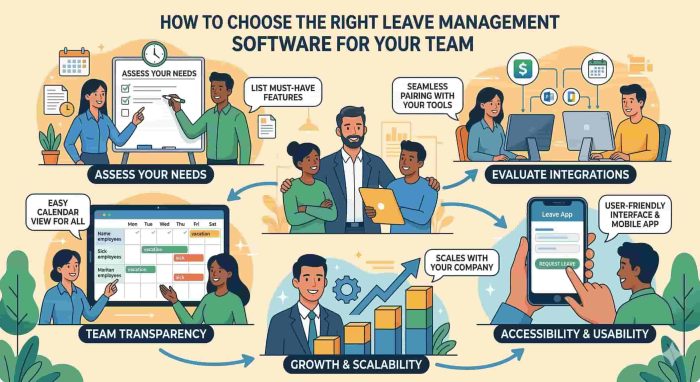
How to Choose the Right Leave Management Software for Your Team
Eight solid options is great – and also a little overwhelming. Here’s how to cut through it quickly.
Start With Your Workflow, Not the Feature List
The most common mistake small businesses make when evaluating hr software for small business is leading with features. Don’t. Start with where your team actually works. If your company runs on Slack or Microsoft Teams, a tool that lives natively inside those platforms will get used. A standalone portal – no matter how feature-rich – will become another tab nobody opens after week two.
Match the Tool to Your Growth Stage
A five-person startup and a 150-person scaling company have fundamentally different needs. If you’re small and lean, a dedicated leave tracking software like AttendanceBot or Calamari gives you exactly what you need without the overhead. If you’re approaching the point where HR, payroll, and IT are all becoming simultaneous headaches, a broader platform like Rippling or Factorial starts making more financial sense even at a higher price point.
Think About Your Team’s Makeup
A fully remote team, a hybrid office, and a frontline shift workforce all need different things from an absence management software. Remote and hybrid teams benefit most from tools with strong calendar sync and async-friendly workflows. Frontline teams need mobile-first design and shift-aware scheduling. Don’t pay for features built for a workforce that doesn’t look like yours.
Don’t Overlook the Admin Experience
Most software demos show you the employee-facing side because it looks clean and simple. Always ask to see the HR admin dashboard. That’s where you’ll spend most of your time – running reports, adjusting balances, handling exceptions, and managing policy changes. A clunky admin experience will drain the time savings you were hoping to gain with a time off management system in the first place.
Run a Real Pilot Before You Commit
Nearly every tool on this list offers a free trial. Use it properly – don’t just click around the dashboard for ten minutes. Run an actual leave request through the full cycle, from submission to approval to balance update. That single workflow will tell you more about whether a tool fits your team than any sales call will.
Frequently Asked Questions
What Is Leave Management Software?
Leave management software is a tool that automates the process of requesting, approving, and tracking employee time off. It replaces manual spreadsheets and email chains with automated workflows that handle PTO balances, approval routing, and team availability in real time.
What Is the Best Leave Management Software for Small Businesses?
The best leave management software for small businesses depends on your existing workflow. For teams on Slack or Microsoft Teams, AttendanceBot is the most frictionless option – it handles leave requests, approvals, and balance tracking without employees ever leaving their workspace. For teams needing a broader HR suite, BambooHR, Factorial, or Rippling are strong alternatives.
Is There a Free Leave Management System for Small Businesses?
Yes. Connecteam offers a free plan for teams of up to 10 users. Several other tools, including AttendanceBot, offer free trials so you can test before committing to a paid plan.
How Does a Leave Management System Improve Compliance?
A good leave management system tracks accruals, carry-over limits, and leave balances automatically – reducing the risk of human error in compliance-sensitive areas like FMLA, state sick leave laws, and contractual entitlements. It also creates a clear audit trail if questions arise later.
Can Leave Management Software Integrate With Payroll?
Yes. Tools like Gusto and Rippling have payroll built in directly. AttendanceBot integrates with Gusto and Wagepoint for payroll sync, and a Rippling integration is currently in early access. It also connects with Jira for project and time tracking.
How Long Does It Take to Set Up Leave Management Software?
Most modern employee leave management systems are designed for quick setup. AttendanceBot can be up and running inside Slack or Teams in under 10 minutes. More comprehensive platforms like BambooHR or Rippling may take a few days to configure properly depending on the complexity of your leave policies.
Ready to Fix Your Leave Management for Good?
Spreadsheets had their moment. In 2026, managing employee time off manually isn’t just inefficient – it’s a liability for any business trying to grow without burning out its HR team.
The right leave management software pays for itself quickly in admin hours saved, compliance risks avoided, and employee frustration eliminated. If your team runs on Slack or Microsoft Teams, AttendanceBot is the fastest way to get there – no new platforms to learn, no complicated setup, and no more Monday morning spreadsheet chaos.
Book a free demo and see how AttendanceBot handles your entire leave management workflow in one place.